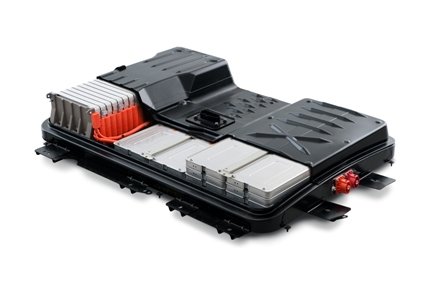
Nissan LEAF Battery Pack
Or, Why it’s important to read the owner’s manual
A look at a very popular LEAF forum (mynissanleaf.com) will show that currently the most active topic is about the battery capacity loss of the LEAF. To clarify, we are talking about the traction battery, or the battery pack used to power the electric motor, as opposed to the 12-volt battery, which is used to power vehicle accessories. We have had many readers express interest in this topic and wanted our view on it. Our intent was to read through all of the posts, analyze them, and write a comprehensive article on the subject. When we started reading the posts, there were about 60 pages or 600 posts. It has since grown to over 1700 posts and counting. Our original plan was to read every post so we didn’t miss an important detail and then write up our review of the situation. However, given the rapid growth rate of the thread, we’ll start writing about this topic now in segments and update our series as we read more posts, and more information becomes available. That said, we choose to start our series on the care and feeding of the Nissan LEAF battery, as it became apparent upon reading the posts of the first several individuals that showed reduced capacity, that many had seemingly neglected to do so. Bear in mind that we don’t know what the charging routines and maintenance activities were for all individuals with battery capacity loss issues, but there was some commonality among the first five. But before we get to the battery capacity loss issue, we wish to take a look at the Nissan LEAF owner’s manual to see what Nissan recommends regarding battery care and maintenance.
As the current model is the 2012 Nissan LEAF we will use that owner’s manual as our reference.
Ambient temperature
In the EV Overview introductory section on Page EV-2 we find this notice:
 Unfortunately, ambient temperature is something that an owner can do very little about, unless they choose to move to another location.
One significant change from the 2011 model year LEAF to 2012 was the inclusion of a battery heater as standard equipment. The battery heater is designed to maintain Lithium ion (Li-ion) battery output in extreme low temperature environments. Here is the notice regarding the Li-ion battery heater (Page EV-5):
 In other words, if it gets really cold where you live, leave the LEAF on the charger, otherwise the battery heater will not work.
Extreme hot temperatures, even for periods as short as one day, may impact battery capacity loss. The effect of extreme cold temperatures can be mitigated to some degree by the use of the on board Li-ion battery heater.
Li-ion Battery Life
Nissan notes over a dozen specific situations or operations that should either be avoided or performed to optimize Li-ion battery life. These are the specifics straight from the owner’s manual (Page EV-23):
NISSAN recommends you use the following driving and charging habits, where possible, to help maximize the battery’s useful life:
- Avoid exposing a vehicle to ambient temperatures above 120°F (49°C) for over 24 hours.
- Avoid storing a vehicle in temperatures below −13°F (−25°C) for over 7 days.
- Avoid leaving your vehicle for over 14 days where the Li-ion battery available charge gauge reaches a zero or near zero (state ofcharge).
- Allow the vehicle and Li-ion battery to cool down after use before charging.
- Park/store your vehicle in cool locations out of direct sunlight and away from heat sources.
- Avoid sustained high battery temperatures (caused, for example, by exposure to very high ambient temperatures or extending highway driving with multiple quick charges).
- Use the normal charging or trickle charging methods to charge the Li-ion battery and minimize the use of public Fast Charge or Quick Charger.
- Avoid sustained high battery state of charge (caused, for example, by frequently charging to 100% state of charge and/or leaving the battery above 80% state of charge for long periods of time).
- Allow the battery charge to be below at least 80% before charging.
- Moderate driving.
- Use of ECO mode.
- NISSAN recommends charging the batteries using the long life mode unless the vehicle is going to be driven a long distance. See “Charging timer” in the “CH. Charging”section.
- If the vehicle will not be used for an extended period of time, charge the Li-ion battery using the long life mode once every 3 months. Do not operate the charging timer repeatedly while the charge connector is connected to the vehicle after the Li-ion battery charging is completed. Doing so may discharge the 12-volt battery. The power of the Li-ion battery can be checked on the Li-ion battery available charge gauge. See “Li-ion battery available charge gauge” in the “2. Instruments and controls” for details.
Before we go further, we understand that no situation exists where an owner would be able to accommodate all of Nissan’s recommendations. Some of these items, are in fact, beyond the control of the vehicle owner. We would like to point out a couple of things about this list. Although the first bullet point talks about high ambient air temperature, several points later Nissan cautions against sustained high battery temperatures. While intuitively it might seem that a black, unvented steel case would make for a very high battery temperature, there are other factors at play. First, the battery pack weighs about 660 pounds. This is very dense weight, as opposed to something like 660 pounds of feathers, which would weigh the same but take up quite a bit more room. What this means is that the starting temperature of the battery pack influences the ultimate temperature due to the inertia involved. Kind of like turning an aircraft carrier moving at speed. It takes awhile to change course. The flip side of that is that once a high battery temperature has been achieved, it could take some time to cool down. Other battery temperature factors could include sustained aggressive acceleration or level 3 DC quick charging, which is why Nissan cautions against quick charging too often (Hat tip to Stoaty for the battery temperature info). Other points worth noting that can be controlled by the vehicle owner are the avoidance of sustained high battery state of charge (such as frequent charging to 100% or leaving the battery above 80% for long periods of time), and allowing the battery state of charge to fall below 80% prior to charging. The long life mode referred to recommends the use of the LEAF’s on board charge timer set to limit charging to 80%.
Our next article in the series will look at the first 250 posts or so, which encompass the first five owners to acknowledge publicly on the My Nissan LEAF forum the loss of one battery capacity segment. Future articles will take us further into the discussion and offer a look into some of the other owners that have experienced LEAF battery capacity loss.
As I finish writing this I see that Nissan has posted an open letter to LEAF owners on the MNL forum. We will include Nissan’s response to this issue, and our analysis of that response, in a future article.

{ 13 comments… read them below or add one }
Excellent post Ernie! I saw that “Open Letter” from Nissan this morning and now I understand why it was disseminated. It seems to me that parking a LEAF in a Phoenix parking lot could be a big issue. If it’s above 100°F ambient temperature (normal summer day there), the parking lot could be over 130°F. On very hot days, they have measured asphalt temperature over 170°F in Arizona.
indy – Thanks for the kind words. My inclination is to believe that there are two factors involved: 1 – Not reading the owner’s manual and understanding the requirements of proper battery life management and 2 – extraordinary heat. I have a lot of reading ahead of me.
I believe that there COULD be at least one other significant factor in capacity bar loss.
There is SOME evidence, that some limitation on maximum charge MAY be set by the LEAFs battery management system. So it is possible, that the capacity bar display, and the GID and SOC reports from aftermarket capacity monitoring devices are showing, in part, that the BMS is limiting the charge level, to a lower percentage of the total battery capacity.
The LEAFs with lost bars may not have “lost” the entire amount of capacity indicated. The bar display may be indicating restrictions, either permanent or temporary, on the maximum percentage of the 24 kWh battery pack, that the LEAF BMS makes available, at “100%” charge.
The LEAF is designed to allow the Driver to use a very high percentage of the total battery capacity, generally believed to be about 94-95%, IIRC, but based AFAIK on observations only of cool climate LEAF Battery packs.
It would be poor planning, IMO, if Nissan has not designed the BMS to be adaptive, and limit charging under high-heat conditions, to help “fool-proof” the maximum charge level for hot-climate regions, where high SOC levels are believed to be most likely to lead to rapid capacity degradation.
Have fun wading through this overly long thread, Ernie.
Hope I’m not the bearer of bad news, when I tell you the near-hysteria on MNL, has led to plenty of other threads, on the same topic.
Looking forward to your further comments,
Ed
Ed, welcome to Living LEAF. Thanks for the encouragement. It will likely be a few days between each post as I have a day job to deal with also, but I’m sure that there is good information buried in all of it. I have seen some of the other topics already, but I’m not quite ready to take on 70 pages of posts on what Nissan should or shouldn’t be doing just yet. It amazes me that so many think that Nissan’s statement was too long in coming, whether they agree or disagree with it. Any large corporation making any product is going to look long and hard at a situation before putting a flag in the ground and making their position known. It’s not as if this battery degradation issue is life threatening. Yes, it reduces vehicle range (and by how much we don’t know. I’ve not heard of anyone testing that, but I’m sure that it will be done soon.) But I think this topic will be with us for months, if not years, as new battery chemistries are introduced and evaluated.
Great job as usual! I was at a Nissan dealer in North County last week and was asked by the salesperson how I liked my LEAF. I told him I loved it but have been following the battery issue closely. He spoke up and said it was no problem as all you had to do was replace one or two bad cells. From what I read I don’t think that is the case. Perhaps you can enlighten guys like me in your future posts on battery health.
Frank – thank you. At this point I think that the entire situation is so early in the game that it’s too soon to know what the end result might be. Nissan choosing to collect customer cars and examine these specimens to determine the issues is a huge step in the right direction. Data analysis will have as much to do with the outcome as battery cell analysis.
Good article, but one sentence is inaccurate:
“Just as the interior temperature inside a closed automobile will be significantly higher than ambient temperature, so will the temperature inside the black steel battery case be significantly higher than ambient.”
In actual fact the closed case and thermal mass of the battery means that there is significant inertia in the battery pack temperature relative to ambient temperature. It is not unusual for me to go out at noon when temperature has risen to 80-85 degrees and find that I still have 5 temperature bars (maximum temperature for battery pack of about 75 degrees). So the battery pack can be higher than ambient, the same, or lower depending on the interaction of several factors:
–Starting battery pack temperature
–Length of time ambient temperature that is higher or lower than battery pack temperature has been maintained
–Heating of the battery pack from aggressive use of the accelerator
–Heating of the battery pack from L2 or especially L3 charging
I suggest revising the article to make this clearer.
Stoaty,
Thanks for the input. I will edit my original article and reference your comment.
It would easier to read if you included the information from my comment in the body of the article (formatted or edited as you see fit)–rather than referring to a comment at the bottom–and just eliminated the crossed out sentence. I don’t need to claim credit (after all who is Stoaty???), just want to see things correctly described. At most, you could put in (Hat tip to Stoaty) in parenthesis.
Done. Thanks again.
Another very informative post, Ernie. Thanks for posting.
Hello Ernie.I’ve only got my leaf six weeks and my journeys are short and so far I have avoided the use of ECO drive.I estimate that I get 42 miles to a charge. That is an L2 charge from full to just where I do a mile or so into the reserve.It takes 4 hours and 20 minutes to charge to cut off point.I have no control over the cut off charge as the computer in the leaf decides that . Nissan says that it takes approximatly 8 hours for a full charge. I must therefore assume that Im only charging to 80%. I am slowly getting around to reading all the comments. Very informative. David
Hi David. I see where Nissan has changed their marketing message on the charge from empty to full. Nissan now claims seven hours from empty to full using a 240-volt charging station. In actual practice, I have never seen it take that long (even seven hours).
First, how do you know if you are charging to 80% or 100%? When you first start your car, if all 12 bars to the right of the distance til empty meter (says “miles” on the dash) light up, you have charged to 100%. If only 10 bars light up, you have charged to 80%.
If you have not set a charge timer on your car it is starting to charge as soon as you plug the charging station into the car. You can set the charge timer (if you wish) by pressing the blue “e” Zero Emission button to the lower right of the navigation screen. This will bring up your selection menu. You can select a 100% charge, or an 80% charge. You can set the charge to start and/or stop at any time you wish. As we have super off peak rates from midnight to 5:00AM, we set no start time, but we set the timer to stop at 5:00AM with an 80% charge. This is satisfactory for our daily use. We charge every night, and have an email set up to notify us upon charge completion. Our car usually reports charging is completed between 4:00AM and 4:45AM. If you wish to charge to 100% nightly, and you are not on any time of service plan, my suggestion is to set the charge timer to stop charging just prior to your normal departure time. Do not set a start time, as the car will select it based on how long it thinks it will take to charge. In this way you minimize battery state of charge time at 100% which will help preserve the life of your battery, but you are still assured of having a 100% charge prior to your departure.
{ 3 trackbacks }