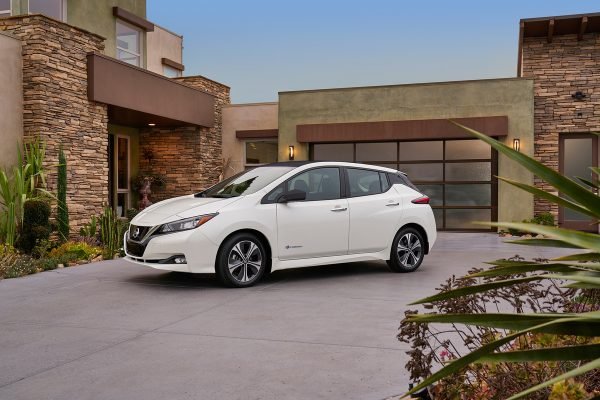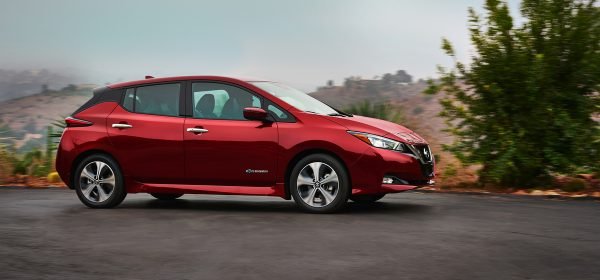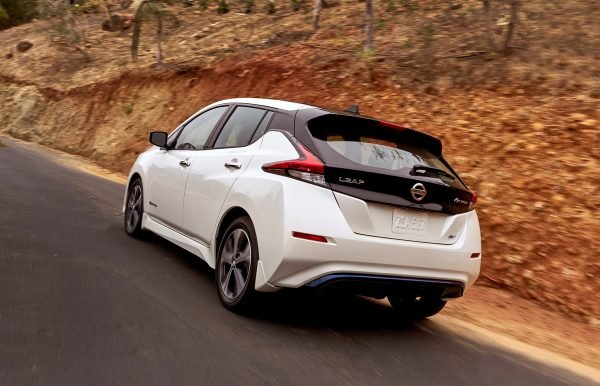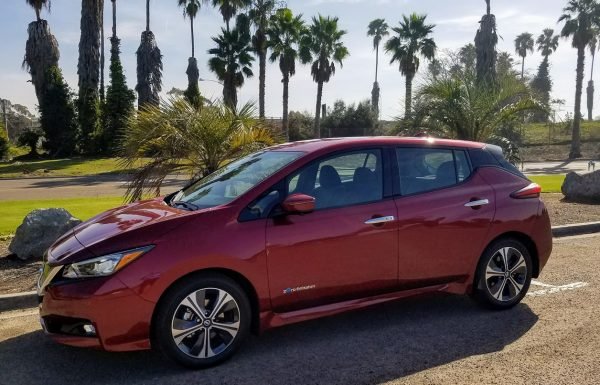
Totally redesigned 2018 Nissan LEAF
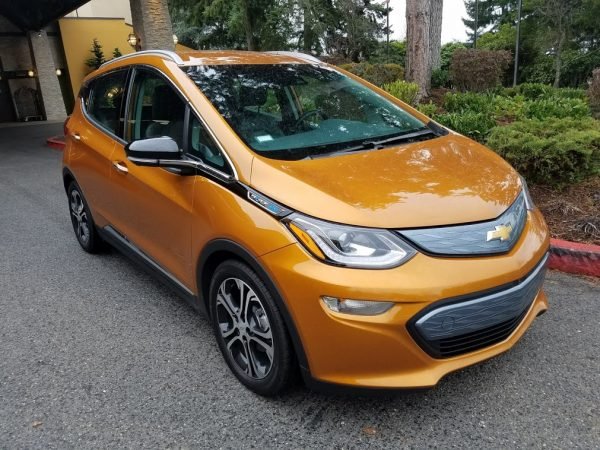
2018 Chevrolet Bolt EV
How do they stack up?
With the launch of the 2018 Nissan LEAF, I thought I’d provide a write-up of the two vehicles most likely to be duking it out for the affordable EV sales crown this year.
Chevrolet launched the 2017 Bolt in late 2016. Not all markets got the car at the same time, similar to when LEAF launched in 2010. Chevy rolled it out in California first, then proceeded across the rest of the country. Sales have steadily ramped up through 2017 with national sales achieving the 3,000 sales per month mark by the end of the year. LEAF achieved similar sales numbers at its peak in 2014.
Range – Bolt wins
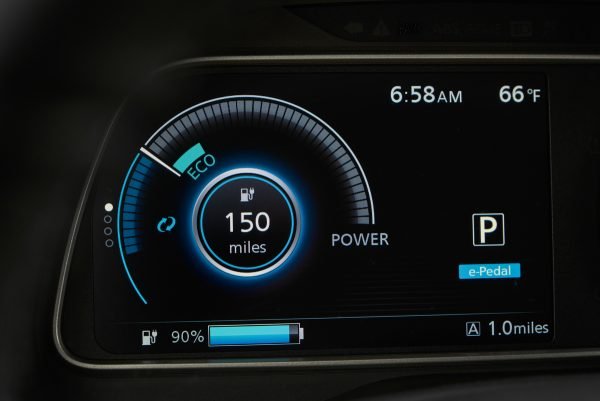
Generally one of the first questions people (still…) ask about an EV is “How far will it go?” EPA says the Bolt will go 238 and the LEAF will go 151. But that’s the wrong question to ask. The better question to ask is (still…) “Will it cover my typical daily driving needs?”
To put that another way, if you drove the Bolt 200 miles every day, you would rack up 73,000 miles per year. Even in commute-intensive Southern California, most drivers don’t cover that much territory. The LEAF, on the other hand, if driven just 100 miles each day would cover 36,500 miles a year. This is well under the stated EPA range of the vehicle, and much farther than the average owner (EV or otherwise) drives each year.
If you truly need a long-range vehicle, I suggest you consider something other than an EV. If you only have one car and really do need to drive long distances on a semi-regular basis, a plug-in hybrid or conventional hybrid may be a better vehicle for you. Although studies have shown that most EV owners own multiple vehicles, and in that case, take the gas guzzler for longer trips.
Style – LEAF wins
I’ve owned three LEAFs, despite how they look. The first gen LEAF is not a pretty car. The same could be said of the first gen Bolt, with its stubby nose leaving much to be desired as there is very little overhang ahead of the front wheels. The Mini Cooper also has a short overhang, but the Mini’s short windshield is very upright, creating its signature boxy look. By contrast, the Bolt’s steeply raked windshield is taller than the hood is long, resulting in proportions that don’t fit within established norms of what a car should look like. The Bolt front end is more akin to a minivan.
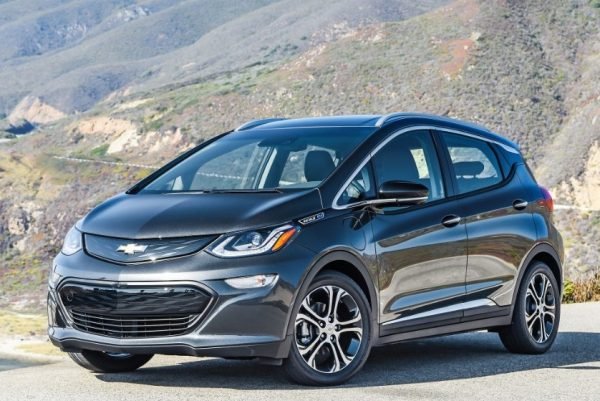
Chevrolet Bolt EV with its short hood and long windshield

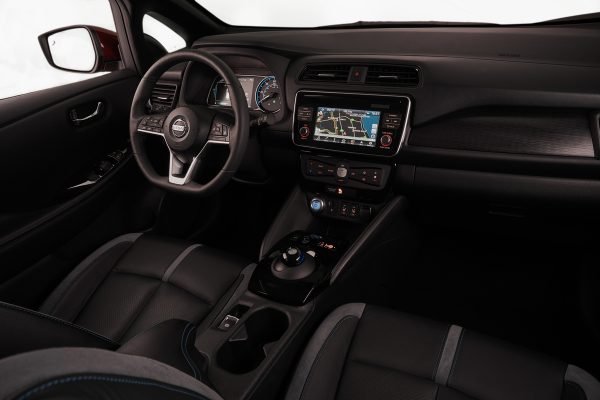
LEAF’s all-new look is longer and sleeker than before
Another contributing factor to Bolt’s style, although many might miss it, is that it rides on a four inch shorter wheelbase than the LEAF. While you might think this would improve the maneuverability of the Bolt, the turning circles are almost identical.
Ride quality and comfort – LEAF wins
You’ve seen stretch limos running around town, right? You know why they’re stretched? In addition to offering more room for the party in back, they offer a better ride quality. The closer the rear wheels are to the front wheels, the choppier the ride. As the two axles move farther apart, the ride improves. This is one of the reasons that large cars generally offer a better ride than sub-compacts. On less than perfect city streets, there is a notable difference between the ride comfort of these two cars.

Bolt seats front and rear have less cushioning than LEAF causing some to complain
Seat design is another factor in the comfort equation. Here the comfort of the LEAF is easily seen as well as felt. The cushion thickness of the Chevrolet seats is significantly thinner than those found in the LEAF. Be sure to fold the back seat down of both vehicles for a clear comparison. Two of the most common complaints submitted from Bolt owners are the seats, and visibility. That long dash creates a big flat space where glare can become problematic.

LEAF rear seats have better side and seat bottom bolsters for improved comfort
Additionally, LEAF offers an acoustic glass windshield to reduce cabin noise.
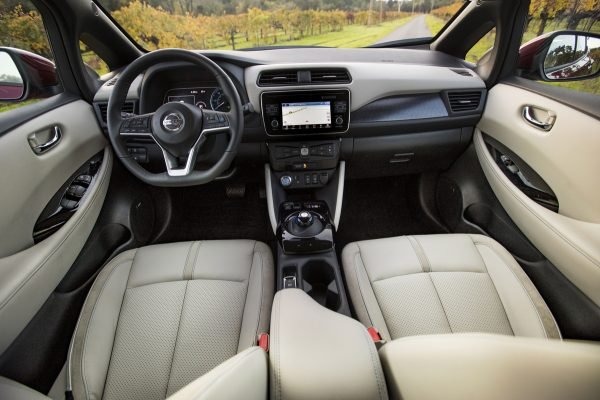
LEAF has an acoustic glass windshield that reduces interior noise
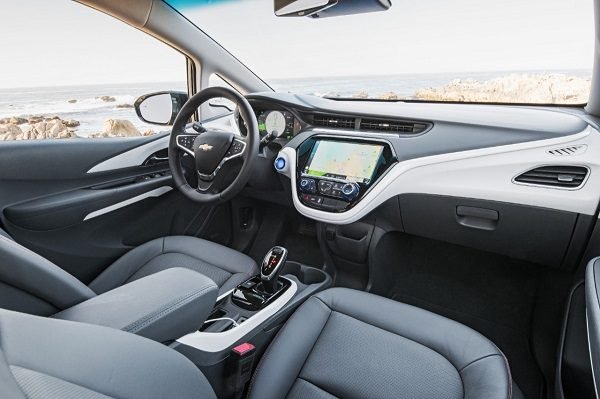
Bolt has a long flat dash that can create glare
I bring this up because one of the major auto publications has published a comparison test of the LEAF, Bolt, and Tesla Model 3. They acknowledged right up front that throwing the Tesla into the mix against these two wasn’t really fair, but they did it anyway. According to their instrumented testing (which I can’t afford to do), if you want a smooth, quiet ride, the LEAF is the EV you’re looking for. (BTW, the Model 3 they had was an early production run version with an MSRP of $60,500. So much for the affordable Tesla…)
Acceleration and Braking – Both have advantages
The Bolt has more power, and will accelerate more quickly. The LEAFs e-Pedal works more consistently.
Bolt offers 200 horsepower. LEAF gives you 147. That said, is anybody really buying either one of these for street racing? Sure, it’s fun to punch the throttle and blow away the unsuspecting Prius sitting next to you at the light, but that’s not really the demographic that either of these cars is going for.
Most people that have never driven an electric car will be more than pleased with the acceleration either provides. Both are quicker than any similarly sized 4-cylinder small hatch. Also, LEAF, with its horsepower and torque bump this year, offers significantly improved mid-range power over the 2017 model. In my view, this makes it much more fun to drive and can provide a margin of safety over the previous car.
Both Bolt and LEAF offer multiple drive modes with varying levels of regenerative braking. For those unfamiliar with the concept, think of engine braking, except in this case it’s provided by the electric motor. In addition to Drive mode, Bolt has a Low mode which enhances the regen, but it also has a paddle on the steering wheel, that when pulled increases it even more.
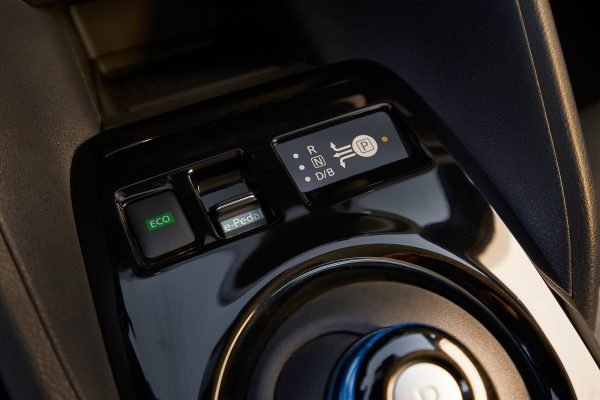
LEAF has a new feature called e-Pedal, which is presented as one pedal driving most of the time. In essence – step on the accelerator to go and lift your foot off the accelerator to slow and stop. Nissan’s drive modes are Drive, Brake mode or B Mode for greater regen, and for the most regenerative braking, toggle the e-Pedal on. This is where Nissan’s engineering team took it to another level.
Regenerative Braking defined
Regen gets talked about a lot, but many people still don’t understand it well.
In a typical gas-powered car, you step on the gas pedal to go. Gasoline is pulled out of the tank, burned in the internal combustion engine which in turn spins the wheels. This is extremely simplified, but you get the idea. In the typical EV you step on the accelerator (it’s okay to still call it the gas pedal, although… you know…) Electricity is pulled out of the battery to turn the electric motor, which in turn spins the wheels. Same basic concept between the two, just a different source of fuel.
Here’s where it gets interesting. In your gas guzzler, when you lift off the throttle, you are no longer taking gas out of the tank, but you’re not putting any into it either. In an EV, when you lift off the throttle, you are putting “gas back into the tank” so to speak.
How?
Cars are now computers on wheels. The electric motor in an EV has only one moving part – the rotor. When it spins, the car moves. In an EV, when you lift your foot off the throttle, a computer tells the electric motor to spin in the opposite direction. The rotor doesn’t care which direction it’s spinning. Think of a jet plane, upon landing, reversing the thrust of the jet engines to slow the plane. The same power that had been pushing it forward is now being used to slow it down. But in the case of the EV, you just turned your electric motor into a generator which is now putting electricity back into the battery. Also, it’s called a regenerative braking system because not only is it putting electricity back into the battery, the effort it takes to do that also slows the car down. Pretty cool stuff!
The problem is this. If you just charged your battery to 100 percent, there is no place for this electricity to go, so regen can’t help slow you down. Nissan learned from their first-generation LEAF owners that they didn’t like it when their car’s driving behavior changed with a full battery. So they took one of those computers and told it to operate the friction brakes on lift throttle conditions when the battery is full. End result – even with a full battery, the e-Pedal will slow the car (using friction brakes) when the battery has a full charge. All without you touching the brake pedal in the LEAF. Oh… your brake lights are also on when you are slowing your LEAF with e-Pedal.
By contrast, the Bolt will only coast with a fully-charged battery when in Low mode because the regenerative braking system does not tie into the friction braking system the same way.
e-Pedal will bring the LEAF to a stop at a traffic light or stop sign, but it does take some getting used to. Learning to recalibrate the connection between your right foot and your brain is easier for some than it is for others. When stopped, the LEAF will not move again until you step on the accelerator. It clamps the brakes and keeps the brake lights illuminated. This is great for those that live in hilly cities like Seattle or San Francisco. The car won’t roll even on an incline. The Bolt doesn’t offer that feature.
Other differences
As with all similar cars, there will always be small differences. Some will be important to one person, but not another. LEAF has sun visors that extend, while Bolt does not. Bolt has a rear seat center arm rest, LEAF doesn’t. LEAF has adjustable seat belt shoulder anchors for different height drivers. Not available on the Bolt. Other differences are not quite as small.
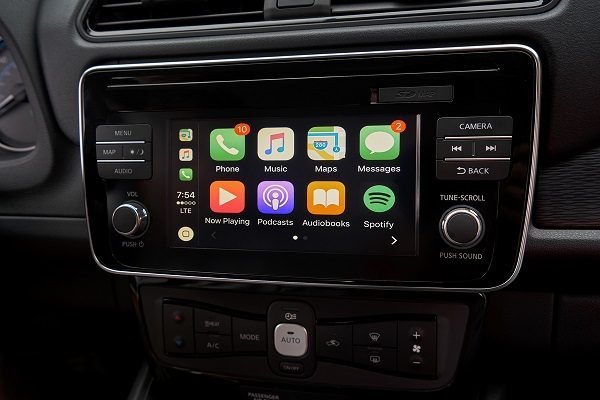
Bolt offers a 10.2 inch dash mounted touch screen. LEAF’s is a puny seven inch screen by comparison. That said, LEAF offers a factory navigation system in addition to Apple CarPlay and Android Auto, which are also available on the Bolt. Bolt though, relies on the smartphone navigation. Broken phone, no USB cable, or bad cell service? No navigation.
For 2018, Nissan brings a power driver’s seat to the LEAF for the first time. You must get an upgraded trim level, but at least it’s available. Chevy misses out on that creature comfort. Even on the top trim level.
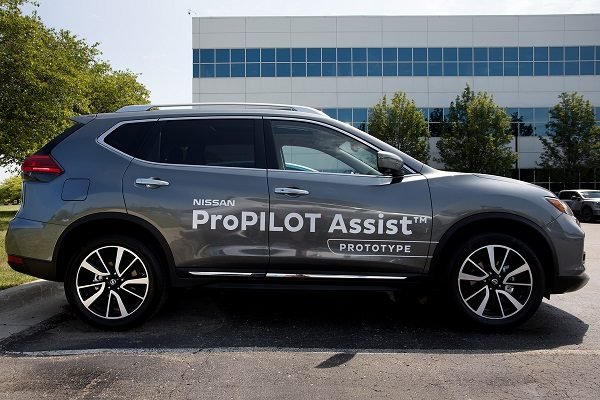
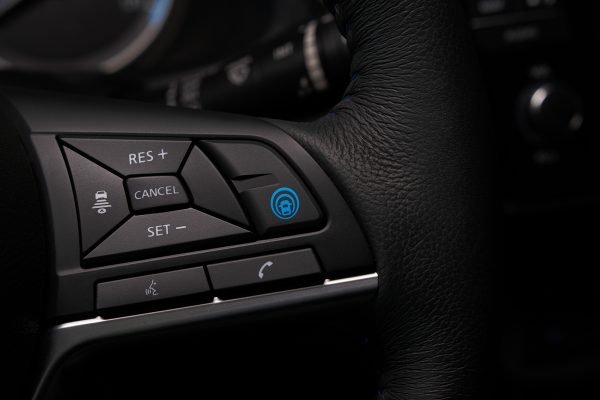
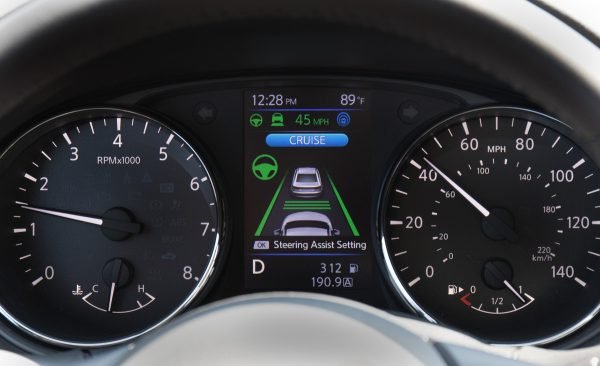
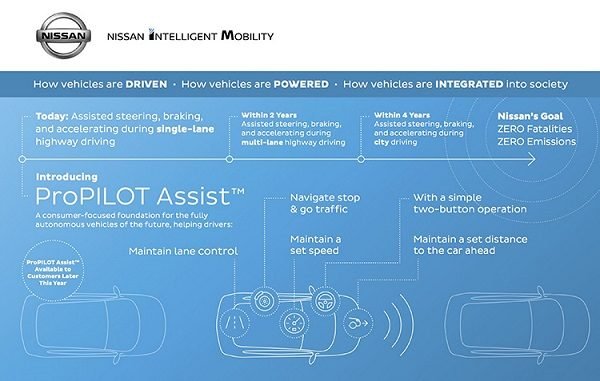
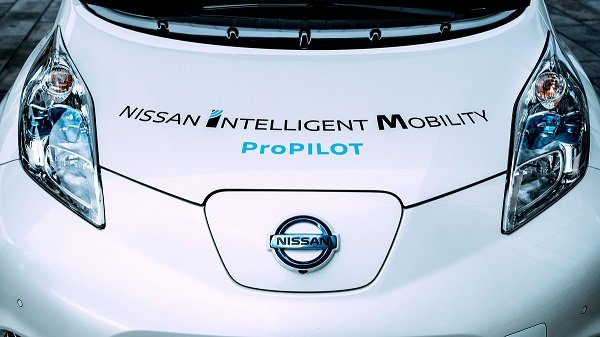
Finally, LEAF brings ProPILOT Assist to the fight. Since I’ve already written about that here, I won’t go over it again. Bolt offers nothing similar.
LEAF vs. Bolt
If you are considering a new EV, you should definitely look at both of these cars to decide for yourself. Some decisions are never easy. Others, the choice is more clear. Consider pricing – LEAF: roughly $30,000 to $39,000. Bolt: roughly $37,000 to $44,000. Getting back to that first question – is eighty eight miles more worth it?